English
 Español
Unfold a new hi vis vest and the label tells most of the story: 100% polyester shell, retroreflective tape, nylon thread, and the standard it was certified to. The short answer to what hi vis vests are made from is polyester fabric, reflective tape, and small components such as zippers, hook-and-loop fasteners, and elastic. But each of these materials does a specific job, and the way they are combined determines how visible, how comfortable, and how long-lasting the vest will be. For anyone buying vests for a crew, understanding these materials is the difference between a garment that passes inspection for two years and one that fades, peels, or fails the standard after a few washes.
Content
The Base Fabric Is Almost Always Polyester
Polyester dominates hi vis vest production for one simple reason: it is lightweight, dries quickly, does not absorb rain or sweat like cotton, resists UV fading better than most fabrics, and takes fluorescent dyes evenly. A standard vest body is made of 100% polyester in one of two forms:
- Solid woven polyester, usually 120 to 200 grams per square meter, gives the vest structure, a large printable surface for logos, and better abrasion resistance.
- Polyester mesh, an open knit construction, trades some durability for airflow. Mesh vests are the default choice for warm-weather work and for jobs where workers already wear a heavy shirt or jacket underneath.
Nylon appears in premium vests because of its tear strength, but it costs more and feels stiffer than polyester. Cotton is now rare in this category; it absorbs moisture, holds fluorescent color poorly, and shrinks. A good example of the mesh approach is our highlight reflective strap vest, which pairs an open-weave polyester mesh body with wide reflective straps so a worker stays cool and visible at the same time.
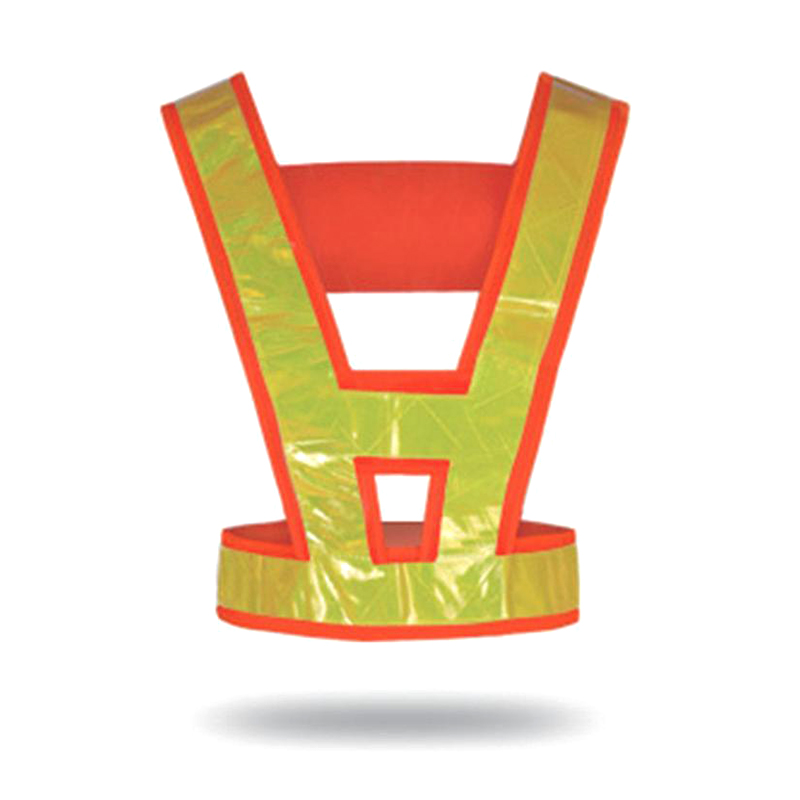 Wholesale Highlight Reflective Strap Vest Factory, Manufacturers - Yan Cheng MakYan Cheng Makku PPE. Co., Ltd is China wholesale Highlight Reflective Strap Vest factory and Highlight Reflective Strap Vest manufacturer...View Product →
Reflective Tape: Glass Beads or Microprismatic Film
Reflective tape is the part that lights up at night, and its layered construction is worth understanding before you buy. There are two main technologies. Glass-bead tape has thousands of microscopic glass spheres partially embedded in a resin layer on a fabric carrier. Light enters a bead, bends, hits the reflective coating at the back, and returns toward the source, which is why an oncoming driver sees the strip glow. Microprismatic film is a thin polymer sheet covered with tiny cube-corner prisms on the back surface. It delivers higher reflectivity, which is why it appears on higher-class garments and on the silver stripes of ANSI Class 3 vests.
The tape is attached either by heat transfer or by sewing. Heat-applied tape bonds fast, lies flat, and is common on vests. Sewn tape is more secure on heavy-use garments but adds labor cost and can limit stretch. Tape performance is measured in candelas per lux per square meter, and ANSI/ISEA 107 sets specific minimum values for each tape width. That measurement drops with washing, UV exposure, and repeated bending, so a vest that starts bright can read as a dull gray strip after a season of hard use.
The Fluorescent Background Is What Makes Color Work in Daylight
The bright lime or orange fabric is not just a dye. Fluorescent pigments absorb invisible ultraviolet light and re-emit it as visible light, making the vest appear brighter than a non-fluorescent fabric of the same color. This is why high-visibility standards use the term "background material" rather than "color." ANSI/ISEA 107-2020 recognizes two fluorescent background colors: yellow-green and orange-red.
The amount of background material is not optional. Each vest class requires a minimum area of fluorescent fabric, and the material must maintain minimum chromaticity and luminance values over the life of the garment. What fails first is usually the fluorescence: UV exposure from the sun, combined with washing, breaks down the fluorescent pigments, and the vest slowly turns from neon lime to pale yellow-green. When that happens, the garment may still look like a safety vest, but it no longer meets the standard.
How the Materials Map to ANSI/ISEA 107 Classes
The same polyester and tape can be made into a Class 1 vest for a parking lot attendant or a Class 3 vest for highway work; the difference is the area of background material, the width of the reflective tape, and the placement rules. A complete walkthrough is available in this reflective safety vest class guide, but the key numbers are shown below.
| Class | Typical environment | Background material minimum | Reflective tape minimum |
|---|---|---|---|
| Class 1 | Parking lots, warehouse aisles | 0.14 m² (217 in²) | 0.10 m² (155 in²) |
| Class 2 | Road construction, railway work | 0.50 m² (775 in²) | 0.13 m² (201 in²) |
| Class 3 | Highway work, emergency response | 0.80 m² (1,240 in²) | 0.20 m² (310 in²) |
European buyers will also encounter EN ISO 20471, which sets similar but not identical requirements, so a vest certified to both standards is a safer bet when supplying multiple markets. When purchasing, insist on a test report or third-party certification for the finished vest, not just for the fabric roll. Both the raw material and the assembly method affect whether the finished vest passes. If you need a balance between compliance and daily practicality, our four-bar multi-pocket color blocking zipper reflective vest shows how multiple pockets and a full front zipper can be integrated with compliant tape placement, so a technician can carry tools without the garment losing its rating.
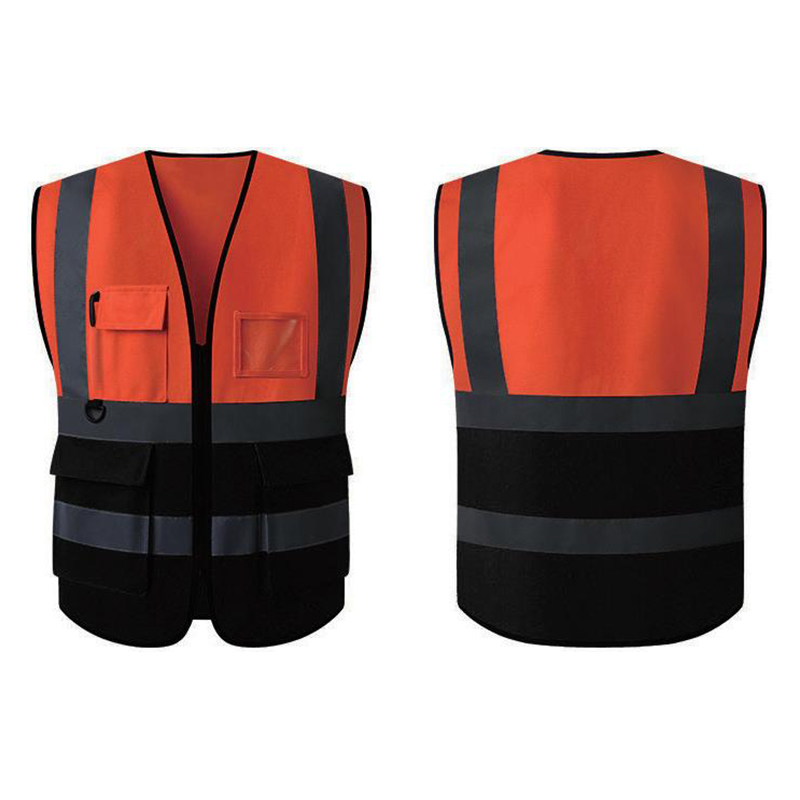 Wholesale Four-bar Multi Pocket Color Blocking Zipper Reflective Vest Factory, MYan Cheng Makku PPE. Co., Ltd is China wholesale Four-bar Multi Pocket Color Blocking Zipper Reflective Vest factory and Four-bar Multi P...View Product →
Mesh or Solid, and What It Means for Your Workers
Once the compliance class is fixed, the biggest purchasing decision is the fabric construction. Mesh vests breathe, so workers keep them on in hot environments, but the open knit snags and prints less cleanly. Solid wovens are more durable, take large custom logos, and block cold wind, so they suit cooler climates and municipal crews who want a neat uniform appearance. The tradeoff is simple: choose mesh for summer heat, choose solid for abrasion, branding, and year-round wear. Before committing to a large order, get samples, wash them ten times, and check how the tape and the fluorescent fabric behave. That test tells you more than any spec sheet.
The price structure reflects the materials. A simple mesh vest is the lowest-cost option. A woven polyester vest with printed logos and full ANSI features sits in the middle. Nylon-reinforced vests with sewn tape and heavy hardware are the premium tier. Buyers who compare ready-made reflective safety vests usually find that the extra money goes into tape quality and stitching, the two areas where saving hurts the most.
Washing and Inspecting Hi Vis Vests
Hi vis materials have a finite life, and the care routine decides how much of it you actually get. ANSI/ISEA 107 performance is evaluated on garments washed a standardized number of times, usually 25 wash cycles at 40°C. A vest that goes into hot water, high-heat drying, or fabric softener will lose reflectivity well before that number. The practical rules are short:
- Wash at 40°C or lower with mild detergent.
- Never use bleach or fabric softener; both attack reflective film and fluorescent pigments.
- Air dry, or tumble dry on low heat.
- Inspect tape edges, seams, and fasteners before each shift.
When the background fabric fades to a dull tint or the tape starts to crack and peel, replace the vest. Sanitation crews are a typical example: they work at dawn and dusk, when the fluorescent background matters most, so their vests are usually cycled on a tighter schedule. Our environmental sanitation worker uniform vest is built for that pattern, with a sturdy polyester shell, broad reflective areas, and hardware sized for daily fastening and unfastening in outdoor shifts.
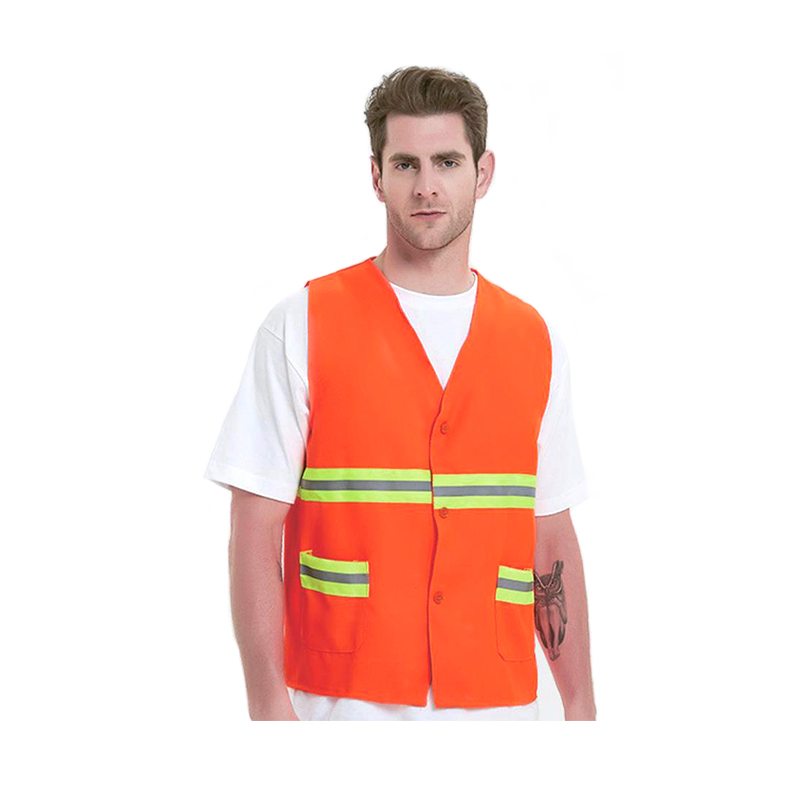 Wholesale Environmental Sanitation Worker Uniform Vest Factory, Manufacturers - Yan Cheng Makku PPE. Co., Ltd is China wholesale Environmental Sanitation Worker Uniform Vest factory and Environmental Sanitation Worker...View Product →
To summarize: hi vis vests are made from 100% polyester or polyester mesh for the body, glass-bead or microprismatic tape for retroreflection, fluorescent pigments for daytime conspicuity, and standard fasteners, elastic, and thread for daily wear. The exact combination is not a stylistic decision; it is a compliance decision. When you know the materials, the class requirements, and the washing limits, you can buy vests that stay certified, visible, and comfortable for their full service life. That is the practical answer to what hi vis vests are made from, and it is the one that keeps your crew visible shift after shift.