English
 Español
Picture this: you are standing on a gravel riverbank in early spring. The water is running cold and fast, and you need to cross it to reach the better fishing spot. If you are wearing the wrong waders, the day ends before it really starts. The same logic applies to an aquaculture worker checking ponds in chilly weather or a contractor standing in shallow water during a drainage job. The right pair of waders keeps you dry, safe, and comfortable. The wrong pair wastes money and makes every minute in the water harder.
The conclusion up front: there is no single best wader for everyone. The decision process has three steps. First, choose the coverage height: hip, waist, or chest. Second, choose the material: neoprene, breathable fabric, nylon, or PVC. Third, choose the boot style. This guide walks through each step, with a closer look at the two categories most buyers care about: chest waders and neoprene chest waders.
Content
Coverage Height: Hip, Waist, or Chest Waders
Waders are classified by how far they extend up the body, and that height sets the maximum water depth you can handle safely.
Hip Waders
Hip waders reach just below or around the knee and are held up by a belt at the waist. They are light, inexpensive, and adequate for shallow streams, boat ramps, and wet cleanup work. The obvious limitation is that water deeper than the boot top can pour in and fill them quickly. Hip waders are the narrowest-use category and usually the first type buyers outgrow.
Waist-Length Waders
Waist-length waders rise to the natural waist and offer noticeably better coverage than hip waders. They are common in aquaculture, farm maintenance, and light fishing where the water stays below waist level. Because they stop at the waist, they are less restrictive and cooler in warm weather, but they are not designed for immersion above the waist.
Chest Waders
Chest waders extend to the chest and are secured with shoulder straps. They allow the wearer to wade to chest depth and are the dominant choice for river fishing, fly fishing, winter angling, and demanding outdoor work. Among all types of chest waders, this design offers the best balance of protection, warmth, and flexibility. One detail deserves emphasis: a wading belt should always be fastened snugly around the waist. If you slip and fall, the belt traps air inside the waders and slows the water from filling the suit, giving you critical seconds to recover.
Boot Styles: Bootfoot vs. Stockingfoot Chest Waders
After choosing chest height, the next decision is how the wader connects to your feet.
Bootfoot Waders
Bootfoot waders have boots molded or bonded directly to the wader legs, so they are ready to wear straight out of the box. The attached boots are usually PVC or rubber with lug soles for grip on slippery riverbeds. Bootfoot models are convenient, generally more affordable, and a practical match for boat fishing, cold weather, and quick trips. The downside is a less precise fit and less ankle support than a separate boot system.
Stockingfoot Waders
Stockingfoot waders end in a thick waterproof sock, typically neoprene, and require separate wading boots. This configuration gives a better fit, real ankle support, and the freedom to match the boot to the terrain. Serious anglers and guides prefer stockingfoot waders for long days on the water. The trade-offs are higher total cost and the need to buy boots separately.
Wader Materials Compared
Material is the most important factor after coverage height. It controls warmth, breathability, weight, and how long the waders will last under hard use.
| Material | Key Strengths | Best For | Main Limitation |
|---|---|---|---|
| Neoprene | Insulates against cold, durable, naturally buoyant | Cold water, winter fishing, stationary work in water | Warm in hot weather, heavier than other options |
| Breathable fabric | Comfortable in warm weather, packs small | Hiking, summer fishing, long walks | Needs insulation layers underneath in cold conditions |
| Coated nylon | Lightweight, abrasion-resistant, good value | Aquaculture, farm work, utility jobs | Limited insulation in cold water |
| PVC / rubber | Fully waterproof, tough, easy to clean | Shallow water, industrial and farm use | Heavier and less breathable than alternatives |
Neoprene Chest Waders
Neoprene chest waders are made from closed-cell synthetic rubber that traps a warm layer of air against the body. Thickness is the specification to watch: 3mm waders suit cool conditions, while 4-5mm models are built for winter fishing and very cold water. Neoprene is also naturally buoyant, which adds a small safety margin when wading deep. These characteristics make neoprene chest waders the standard choice for cold-water anglers and for workers who stand in chilly water for hours. A practical example is the 4-5mm camouflage neoprene chest wader, which combines a thick neoprene core with a finish suited to hunting and fishing environments.
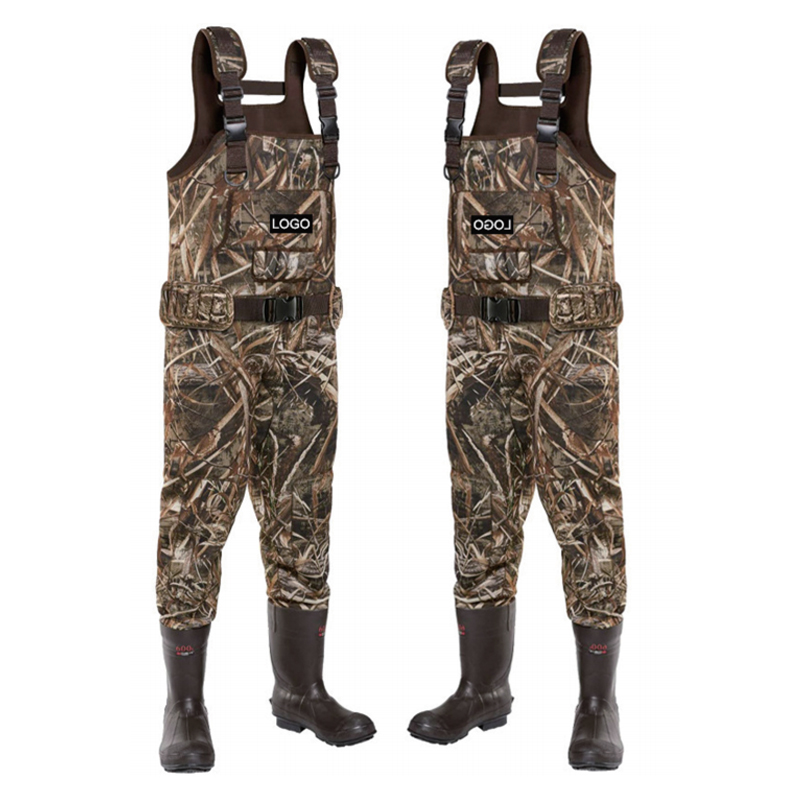 Wholesale 4.5mm Camouflage Neoprene Wader Factory, Manufacturers - Yan Cheng MakYan Cheng Makku PPE. Co., Ltd is China wholesale 4.5mm Camouflage Neoprene Wader factory and 4.5mm Camouflage Neoprene Wader manufacturer...View Product →
When the water is below about 10°C (50°F), neoprene keeps you warmer for longer. When you must walk long distances between fishing spots, breathable fabric is much more comfortable. Our neoprene versus breathable wader comparison explains the trade-offs in detail.
Breathable Fabric Chest Waders
Breathable waders use a waterproof membrane bonded to a face fabric, allowing sweat vapor to escape while keeping water out. They do not insulate on their own, but they perform well in warm weather and during active use. Anglers who hike between fishing spots should choose breathable waders and add insulating layers underneath when temperatures drop. The three-layer breathable fabric high chest fishing pants are a solid example, with a durable shell and reliable waterproofing for multi-hour sessions.
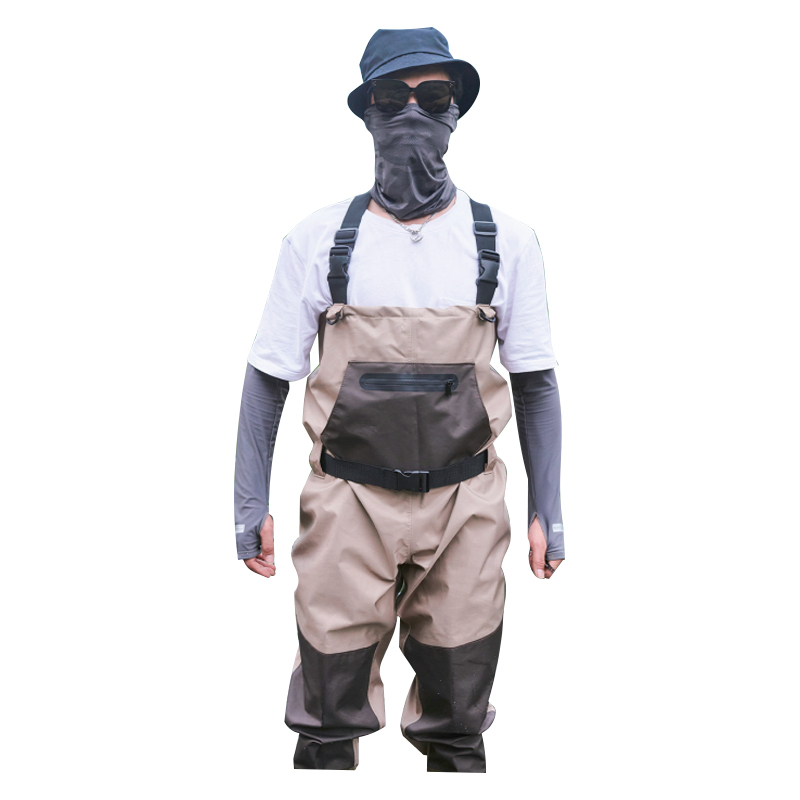 Wholesale Three Layer Breathable Fabric High Chest Fishing Pants Factory, ManufaYan Cheng Makku PPE. Co., Ltd is China wholesale Three Layer Breathable Fabric High Chest Fishing Pants factory and Three Layer Breathabl...View Product →
Coated Nylon and PVC Waders
Coated nylon and PVC waders sit at the value end of the range. They are fully waterproof, easy to wipe down, and tough enough for aquaculture, farming, and industrial cleaning. Nylon in 70D or 420D weights resists abrasion well, and PVC adds a wear-resistant layer for rough conditions. These waders are rarely the first choice for long fishing trips, but they are often the right choice for routine work in shallow water.
Practical Buying Considerations
Beyond type and material, a few practical checks separate good purchases from regretful ones.
- Water temperature: Below 10°C, choose neoprene. Above 10°C, breathable fabric with extra layers is easier to manage.
- Walking distance: More hiking means more sweat, so prioritize breathability. Stationary work in cold water means insulation matters more.
- Seam quality: Taped or double-stitched seams are the first point of failure on waders. Inspect them before buying and check them periodically during the season.
- Sizing: Check chest circumference, inseam, and boot size against the size chart. Neoprene stretches slightly, but an oversized pair creates uncomfortable bunching around the hips and straps. Manufacturers usually cover a wide range of body types; the S-3XL brown and grey-green neoprene chest wader
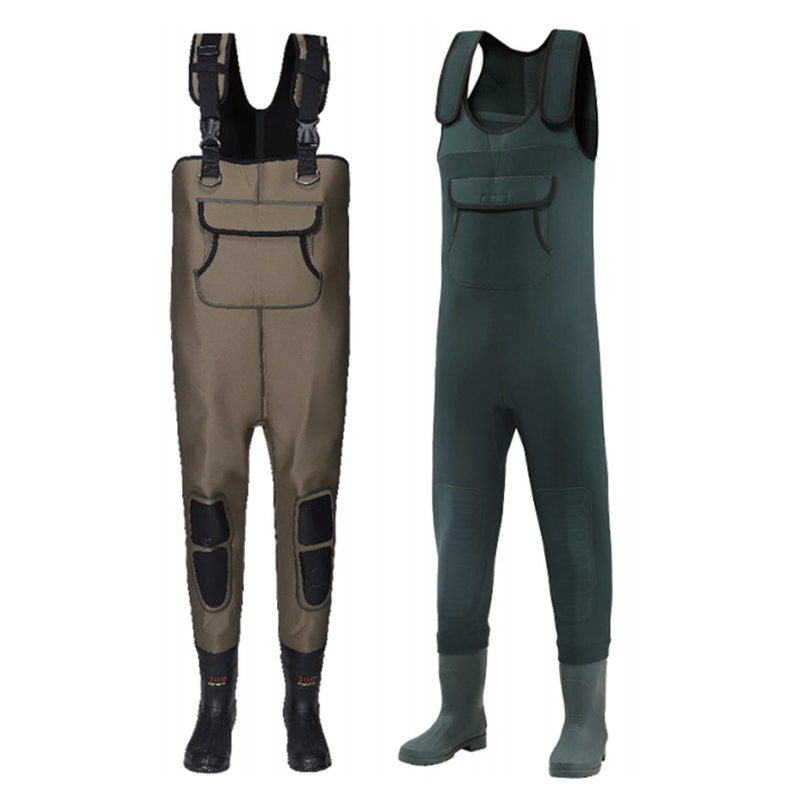 Wholesale S-3XL Brown/Grey/Green Neoprene Chest Waders Factory, Manufacturers - Yan Cheng Makku PPE. Co., Ltd is China wholesale S-3XL Brown/Grey/Green Neoprene Chest Waders factory and S-3XL Brown/Grey/Green Neoprene...View Product →, for example, spans most adult sizes in one product line.
 - Wading belt: A belt is not optional for chest waders. It is a basic safety device and should be included or purchased at the same time.
Care and Maintenance
Waders last for years if cleaned and stored correctly. Rinse them inside and out with fresh water after every saltwater use, hang them in the shade to dry, and keep them away from direct sunlight and heat sources. Check seams, boot seals, and straps before each outing. Small pinhole leaks can be repaired quickly, and regular maintenance prevents small problems from becoming replacement-size ones. On neoprene models, pay special attention to the boot-to-leg seal and the shoulder strap stitching, since those areas take the most stress.
Conclusion
Choosing among the types of waders does not have to be complicated. Start with water depth to select hip, waist, or chest coverage. Then use water temperature and activity level to decide between neoprene and breathable material. Finally, pick a bootfoot or stockingfoot configuration based on how much walking you expect. Applied in that order, these three decisions point you to the right pair and prevent the wasted money and lost fishing days that come from an unsuitable buy.
Most buyers also care about what happens after the sale. As a wader manufacturer with an in-house factory in Yancheng, China, jsmakku can discuss custom sizing, logo printing, bulk pricing, and shipping options directly. If you are planning a bulk order or need specification advice, contact our team with your requirements and intended use case, and we will recommend a practical solution.