English
 Español
Content
- 1 Can You Sew a Raincoat at Home? Yes — With the Right Materials
- 2 Choosing Your Adult Raincoat Material: PE vs. PVC Polyester vs. EVA
- 3 Tools and Supplies You Need Before You Start
- 4 Taking Measurements and Selecting the Right Pattern Size
- 5 How to Cut Waterproof Raincoat Fabric Correctly
- 6 Step-by-Step: How to Sew an Adult Raincoat
- 6.1 Step 1: Set Up Your Sewing Machine for Waterproof Fabric
- 6.2 Step 2: Sew Pockets and Hood Details First
- 6.3 Step 3: Sew Shoulder Seams
- 6.4 Step 4: Set In Sleeves
- 6.5 Step 5: Sew Side Seams and Underarm Seams in One Pass
- 6.6 Step 6: Attach the Hood
- 6.7 Step 7: Install the Front Zipper or Snap Closure
- 6.8 Step 8: Finish Hems and Sleeve Cuffs
- 7 Sealing Seams: The Step Most DIY Raincoats Skip
- 8 Material-Specific Sewing Tips for PE, PVC Polyester, and EVA
- 9 Common Mistakes to Avoid When Sewing an Adult Raincoat
Can You Sew a Raincoat at Home? Yes — With the Right Materials
Sewing an adult raincoat at home is absolutely achievable, but success depends almost entirely on choosing the right waterproof fabric and using the correct techniques for that material. Standard sewing methods — including regular stitching and pressing with an iron — can damage or delaminate waterproof fabrics if applied incorrectly. The three most common materials for adult DIY raincoats are PE (polyethylene), PVC-coated polyester, and EVA (ethylene-vinyl acetate), each requiring a slightly different construction approach.
This guide walks you through everything: how to choose the right adult raincoat fabric, how to cut and prepare waterproof materials, how to sew seams that stay waterproof, and how to finish a functional, well-fitting adult raincoat from scratch. Whether you are making a packable travel raincoat, a heavy-duty outdoor shell, or a simple PE poncho-style coat, the foundational steps apply across all three material types.
Choosing Your Adult Raincoat Material: PE vs. PVC Polyester vs. EVA
Before cutting a single piece of fabric, you need to understand the material you are working with. Each of the three main adult raincoat fabrics has distinct properties, sewing behavior, and ideal use cases.
| Material | Weight | Waterproofing | Sewability | Best For |
|---|---|---|---|---|
| Adult PE Raincoat | Very light (60–80 gsm) | Good — inherently waterproof film | Moderate — tears at needle holes if overstressed | Disposable or emergency-use raincoats, ponchos |
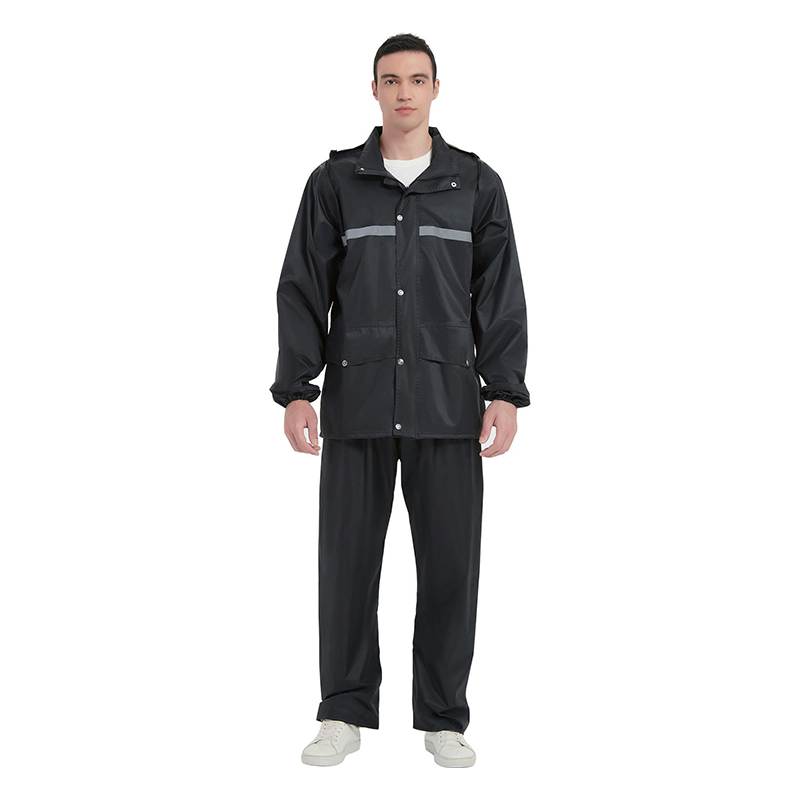
| Adult PVC Polyester Raincoat | Medium-heavy (200–400 gsm) | Excellent — PVC coating is highly water-resistant | Good — durable, holds stitching well | Durable outdoor, workwear, and festival raincoats |
| Adult EVA Raincoat | Light-medium (100–150 gsm) | Very good — soft, flexible film | Moderate — soft, can stretch; use walking foot | Eco-friendly, reusable everyday raincoats |
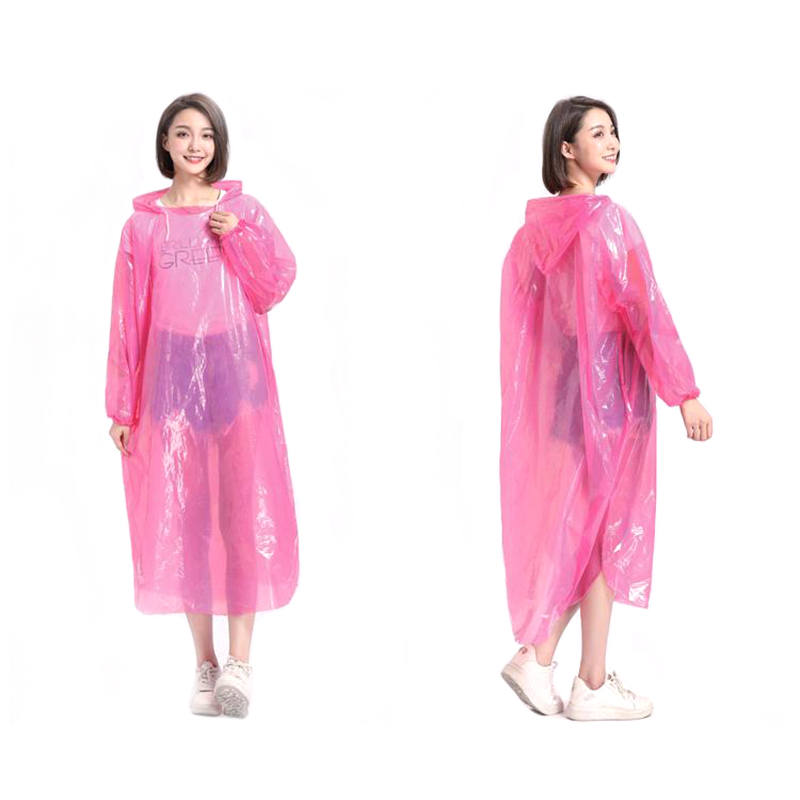
Adult PE Raincoat Fabric
PE (polyethylene) fabric is a thin, crinkly plastic film — sometimes bonded to a lightweight non-woven backing for added strength. It is the most affordable option at roughly $1–$3 per yard, inherently waterproof without any coating, and extremely lightweight. However, PE is the least durable of the three: needle holes do not self-seal, meaning seams can become water entry points without seam tape. It is best suited for single-use or emergency raincoats, festival ponchos, or short-season disposable outerwear.
Adult PVC Polyester Raincoat Fabric
PVC-coated polyester is a woven or knit polyester base with a PVC (polyvinyl chloride) coating applied to one or both sides. This is the most durable adult raincoat fabric for DIY sewing, able to withstand abrasion, heavy rain, and repeated use. Weight ranges from 200 to 400 gsm, and it holds stitching very well. Seams on PVC polyester raincoats should be sealed with seam sealing tape or seam sealing liquid for full waterproofing. Cost runs approximately $5–$12 per yard depending on thickness and finish.
Adult EVA Raincoat Fabric
EVA (ethylene-vinyl acetate) is a softer, more pliable plastic film than PE, often marketed as an eco-friendly PVC alternative because it contains no chlorine or phthalates. It is naturally waterproof, flexible even in cold temperatures, and available in a wide range of transparent and colored options. EVA is increasingly popular for stylish, reusable everyday adult raincoats. At $3–$7 per yard, it sits between PE and PVC polyester in both cost and durability.
Tools and Supplies You Need Before You Start
Sewing waterproof raincoat fabric requires a few specialized tools beyond a standard home sewing kit. Gathering everything before you start prevents mid-project frustrations:
- Sewing machine with a walking foot or Teflon foot: A Teflon-coated presser foot (also called a non-stick foot) prevents the fabric from sticking and dragging under the foot during stitching. This is essential for PE and EVA fabrics. A walking foot is helpful for thicker PVC polyester.
- Sharp microtex or universal needles, size 80/12 or 90/14: A sharp needle punctures cleanly rather than pushing fabric aside, reducing the size of each needle hole — important for minimizing water ingress points.
- Seam sealing tape or seam sealing liquid: Required for any adult raincoat intended for use in moderate to heavy rain. Iron-on seam tape (such as Gear Aid Seam Grip) bonds over the stitch line to block water entry.
- Rotary cutter and cutting mat: Scissors can drag and distort lightweight PE and EVA films. A sharp rotary cutter gives clean, straight edges with less handling of the material.
- Pattern weights instead of pins: Pins create permanent holes in waterproof films. Use pattern weights or small binder clips to hold pattern pieces in place while cutting.
- Wonder clips or binder clips: Replace pins for holding seam allowances together during stitching. Clips grip without piercing the fabric.
- Polyester thread: Use 100% polyester thread — it resists moisture and does not rot or weaken when wet, unlike cotton thread.
- Raincoat pattern: Choose a pattern designed for waterproof fabrics — look for patterns labeled "anorak," "rain shell," or "cagoule." Free and paid PDF patterns are available from sources like Sewaholic, Grainline Studio, and Simplicity.
Taking Measurements and Selecting the Right Pattern Size
Adult raincoat patterns are sized differently from standard garment patterns because raincoats are worn over other clothing and require additional ease for movement. Before selecting a pattern size, take these four key measurements:
- Chest/bust: Measure around the fullest part of the chest, keeping the tape level. For an adult raincoat, add 4–6 inches of ease to your actual chest measurement to account for layering.
- Back length: Measure from the center back neck to the desired hem length — typically mid-thigh (about 25–30 inches below the waist) for a standard adult raincoat.
- Sleeve length: Measure from the shoulder point to the wrist bone with a slight bend in the elbow. Add 0.5–1 inch for ease over a sweater or fleece layer.
- Shoulder width: Measure straight across the back from shoulder seam to shoulder seam. Raincoat shoulder seams typically sit slightly wider than regular garment patterns to allow arm movement.
Most commercial adult raincoat patterns include a size chart — always fit to your chest measurement first, then make length adjustments. Do not skip making a muslin test garment in inexpensive fabric before cutting into your waterproof material. Ripping out stitches in PE or EVA leaves permanent holes; in PVC polyester the holes are smaller but still visible and weaken the seam.
How to Cut Waterproof Raincoat Fabric Correctly
Cutting waterproof fabrics requires a different approach from cutting woven or knit garment fabrics. Follow these steps to avoid distortion, tearing, and pattern shifting:
- Lay fabric flat on a smooth, hard surface. Do not cut on a fabric cutting mat alone for large pieces — use a table with a cutting mat on top. PE and EVA films can shift on soft surfaces.
- Trace pattern pieces with chalk or a water-soluble marker on the wrong side. Avoid using regular ballpoint pens on EVA — the ink may transfer. A chalk wheel or tailor's chalk works best on all three materials.
- Use pattern weights instead of pins to hold pattern pieces down. Heavy metal pattern weights or even smooth-bottomed household objects work well. Never push pins through PE or EVA films — the holes are permanent and may cause tearing along seam lines under stress.
- Cut with a sharp rotary cutter in one confident pass. Multiple hesitant passes produce jagged edges. For straight lines, use a long ruler as a guide. For curves, cut slowly and follow the line smoothly without lifting the cutter mid-curve.
- Mark notches with tiny clips into the seam allowance rather than outward notches. Inward clips are less likely to cause tearing in waterproof films. Mark drill holes and other construction points with a chalk dot rather than a hole punch.
Step-by-Step: How to Sew an Adult Raincoat
Once your pattern pieces are cut, follow this construction sequence. The order matters — sewing pockets and details before joining major panels keeps the work manageable and the fabric flat under the machine.
Step 1: Set Up Your Sewing Machine for Waterproof Fabric
Install a Teflon or non-stick presser foot. Set the stitch length to 3.0–3.5mm — longer stitches create fewer needle holes per inch, which reduces water ingress and prevents perforation-style tearing along seam lines. Use a stitch length shorter than 3mm only if your pattern specifically calls for it. Set tension to the middle setting and test on a fabric scrap before sewing the actual garment pieces.
Step 2: Sew Pockets and Hood Details First
Attach any front welt pockets, chest pockets, or interior zip pockets before joining the front and back panels. If your pattern includes a drawstring hood, assemble the hood separately — sewing the center back hood seam and any brim or visor sections — before attaching it to the body. Working on smaller components first lets you handle lighter, more manageable pieces under the machine rather than wrestling a full assembled coat.
Step 3: Sew Shoulder Seams
Join the front and back body panels at the shoulder seams. For PVC polyester raincoats, press the seam allowance open using a low-heat iron with a pressing cloth — never apply a hot iron directly to PVC, PE, or EVA, as all three will melt or delaminate. For PE and EVA raincoats, finger-press or use a bone folder to open seam allowances without any heat at all.
Step 4: Set In Sleeves
Pin — or clip — the sleeve cap into the armhole, matching notches and easing any fullness. For adult raincoats, sleeves are often cut with minimal ease to reduce bulk at the armhole, making this step easier than in tailored garments. Sew the armhole seam at the standard 5/8-inch seam allowance, then sew a second line of stitching 1/4 inch inside the first within the seam allowance for added strength. Trim the seam allowance to 3/8 inch after the second stitching line.
Step 5: Sew Side Seams and Underarm Seams in One Pass
Many raincoat patterns run the side seam and sleeve underarm seam as a single continuous seam from the hem to the sleeve hem. This reduces the total number of seams requiring seam sealing and creates a stronger, cleaner finish. Clip or pin the seam at 4–6 inch intervals and stitch from the hem upward, pivoting at the underarm point.
Step 6: Attach the Hood
With the body assembled, attach the pre-sewn hood to the neckline. Match the center back of the hood to the center back neckline seam, and the front hood edges to the front neckline points. Clip generously around the curved neckline before stitching to prevent puckering. Sew with a 5/8-inch seam allowance and reinforce by sewing a second parallel line of stitching 1/4 inch inside the first.
Step 7: Install the Front Zipper or Snap Closure
Adult raincoats typically close with a waterproof zipper, snaps, or a combination of both. Use a YKK waterproof or water-resistant zipper (labeled "AquaGuard" or similar) rather than a standard garment zipper. Baste the zipper tape in place with clips, then topstitch using a zipper foot. For a storm flap over the zipper, sew an additional panel of fabric to cover the closure, attaching it to one front edge only so it folds over the zipper when the coat is closed.
Step 8: Finish Hems and Sleeve Cuffs
Avoid traditional folded and pressed hems on PE and EVA raincoats — the crease lines can weaken the film. Instead, fold the hem allowance once (a single fold) to 1 inch and topstitch in place with two parallel rows of stitching. For PVC polyester, a double-fold hem is possible with careful low-heat pressing using a cloth barrier. Sleeve cuffs can be finished with a single-fold hem, elastic casing, or hook-and-loop tape tabs for adjustability.
Sealing Seams: The Step Most DIY Raincoats Skip
Seam sealing is the single most important finishing step for a functional adult raincoat. Even the most carefully sewn seam leaves needle-sized holes through which water will penetrate under sustained rain. Seam sealing closes these holes and transforms a water-resistant garment into a genuinely waterproof one.
There are two main seam sealing methods for home sewers:
- Iron-on seam sealing tape: Narrow strips of heat-activated adhesive tape (typically 3/4 inch or 1 inch wide) are pressed over the seam allowance on the interior of the garment. Products such as Gear Aid Seam Grip + WP Tape or Bemis Seam Tape work well on PVC polyester and EVA. Apply at a low heat setting (around 120°C / 250°F) using a pressing cloth. Do not use iron-on tape on PE film — the heat required to activate the adhesive will melt or distort the fabric.
- Seam sealing liquid (seam sealant): Brush-on or squeeze-on sealants such as Gear Aid Seam Grip+SIL or McNett Seam Sealer are applied over the stitching line on the inside of the garment and allowed to cure for 8–12 hours. This method works on all three materials and is the only safe option for PE film. Apply in a thin, even bead directly over the stitch line and smooth with a gloved finger or foam brush.
Seal every structural seam: shoulder seams, side seams, armhole seams, and the hood attachment seam. Pocket seams and the zipper attachment seam should also be sealed if the coat will be worn in heavy rain. Allow all seam sealant to cure fully before wearing or testing the garment — most liquid sealants need a full 24 hours at room temperature to reach maximum adhesion.
Material-Specific Sewing Tips for PE, PVC Polyester, and EVA
Each material has particular behaviors at the sewing machine that are worth knowing before you sit down to sew.
Sewing Adult PE Raincoat Fabric
- PE film is slippery and prone to shifting — use pattern weights and sew slowly, guiding the fabric with both hands.
- If the fabric sticks under the presser foot, place a strip of tissue paper over the seam line and sew through it — the tissue tears away cleanly after stitching.
- Use the longest stitch setting suitable (3.5mm) to minimize perforation along seam lines.
- Never backstitch at the beginning and end of seams — the dense needle penetration creates a tear-out point. Instead, tie thread tails by hand or leave long tails and knot them.
Sewing Adult PVC Polyester Raincoat Fabric
- PVC polyester is the most forgiving of the three to sew — it is dimensionally stable, holds its shape, and does not stretch or distort under the presser foot.
- A standard universal needle works, but a leather needle can produce cleaner holes in heavily coated fabric.
- PVC can stick to the presser foot — use a Teflon foot or place tissue paper over the seam as with PE.
- Seam allowances can be topstitched flat on the outside for a more structured, professional look common in workwear-style adult raincoats.
Sewing Adult EVA Raincoat Fabric
- EVA is soft and pliable — it feeds through the machine more smoothly than PE but can stretch slightly if pulled. Let the machine feed the fabric naturally without applying backward tension.
- A walking foot is ideal for EVA, especially on curved seams, to prevent the upper and lower layers from shifting relative to each other.
- EVA accepts seam sealing liquid well. Brush-on sealant bonds effectively to EVA's surface and creates a durable waterproof barrier over stitching.
- EVA is available in fashionable transparent and frosted finishes that have made it popular for stylish urban adult raincoats. The interior seams are visible through transparent EVA, so neat stitching and finished seam allowances matter aesthetically as well as functionally.
Common Mistakes to Avoid When Sewing an Adult Raincoat
Even experienced sewers run into problems with waterproof fabrics. These are the mistakes most likely to compromise your finished adult raincoat:
- Using pins directly in the fabric. Pin holes in PE and EVA are permanent. Use pattern weights for cutting and wonder clips for sewing. If you must use pins, confine them entirely within the seam allowance where they will be enclosed in the seam.
- Skipping the test seam. Always sew a test seam on a fabric scrap with your chosen needle, stitch length, and thread before touching the actual garment pieces. Adjusting machine settings mid-project on waterproof fabric is difficult to undo.
- Applying a hot iron directly to waterproof fabric. PE, EVA, and PVC-coated polyester all react badly to high heat — they melt, bubble, or delaminate. Always use a pressing cloth and low heat, or use a bone folder for PE and EVA.
- Using cotton thread. Cotton thread absorbs water and degrades over time when used in rainwear. Always use 100% polyester thread in adult raincoat construction.
- Skipping seam sealing. A beautifully sewn raincoat will still leak at every stitch line in heavy rain without seam sealing. This step is non-negotiable for any coat intended for real outdoor use.
- Not making a muslin first. Ripping seams in waterproof fabric leaves permanent damage. A muslin test garment in cheap cotton or non-woven interfacing confirms fit and construction sequence before committing to the actual raincoat fabric.
- Choosing a standard garment zipper. Regular metal or coil zippers are not water-resistant. Use a waterproof or water-resistant zipper specifically designed for outerwear — these have a tape coating or backing that repels water at the zipper channel.